
Written by the WideConcepts manufacturing team. Last updated: April 2026. Specifications and sources are listed below. Ask for a project-specific quotation.
Kitchen quotations can look similar while covering different materials, fittings and installation work. Compare the written specifications and scope, not photographs or the headline amount alone.
We’ve been manufacturing modular kitchens in Delhi NCR since 2014. This article is what we’d tell our own family if they were buying a kitchen tomorrow. Clear specifications, referenced standards and practical questions — including the parts that don’t help our sales pitch.
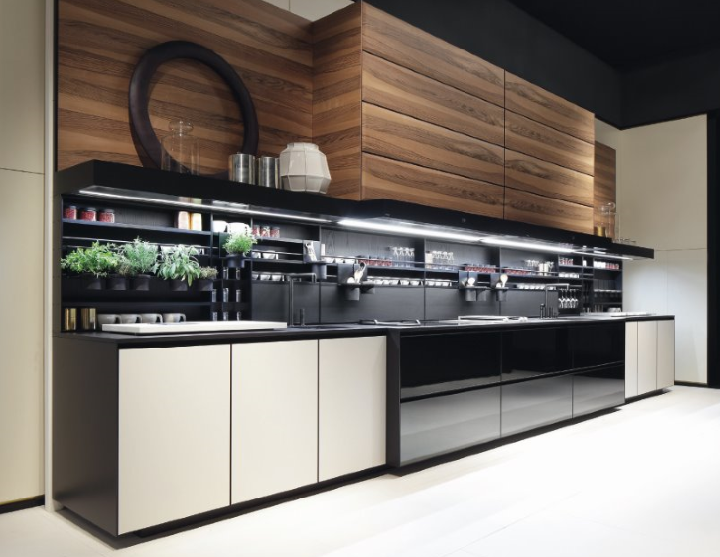
What determines a modular kitchen quotation?
Ask for a quotation based on your measured layout, cabinet specification, finish and named hardware. Confirm whether the countertop, installation, transport and taxes are included. Civil work, plumbing, electrical changes and appliances should be listed separately when outside the cabinetry scope.
Mistake 1: Comparing quotes by total amount instead of by spec sheet
Two quotations for the same layout may specify different boards, finishes and hardware. Check these details before comparing the total.
What an honest spec sheet should list, line by line:
- Carcass material with grade — “18mm HDHMR (Action Tesa)” or “18mm BWP IS:710 plywood (Greenply Gold Marine)” — not “marine ply” or “good quality plywood”
- Shutter material with finish type — “18mm HDHMR with 1mm acrylic finish” or “18mm BWP ply with 0.8mm laminate”
- Edge banding thickness and material — 0.8mm/1mm/2mm PVC, with sealed edges
- Hinge brand and model — “Hettich Sensys soft-close” or “Ebco soft-close” — not “soft-close hinges”
- Drawer slide brand and load capacity — “Hettich Quadro 25kg” or “Hettich Innotech”
- Handles — brand and material
- Countertop — granite/quartz/marble/Hi-Macs with thickness and brand
- Backsplash, skirting, lighting — included or extra
- Warranty period per component — explicit, not “comprehensive warranty”
If a vendor refuses to give you this spec sheet, walk away. Their quote isn’t a real quote.
Mistake 2: Misunderstanding what your carcass material actually means
The carcass is the structural box of every cabinet — the load-bearing element. The shutter (door) is just the visible 6mm panel attached to it. Vendors talk about shutter finish for an hour and barely mention carcass material — but the carcass is what determines whether your kitchen lasts 5 years or 15.
Compare the material specifications below and confirm the current product grade with your supplier:
| Material | Moisture resistance | Typical kitchen lifespan | Verdict |
|---|---|---|---|
| Pre-laminated particle board (PLPB) | Poor — swells with moisture rapidly | 4-7 years | Avoid for kitchens. Acceptable for low-moisture furniture only. |
| MDF (Medium Density Fibreboard) | Poor unless waterproofed | 5-8 years | OK for shutter face, NOT for kitchen carcass. Standard MDF disintegrates under sustained kitchen humidity. |
| BWR plywood (Boiling Water Resistant) | Moderate | 8-12 years | Budget acceptable. Stamped IS:303. |
| BWP plywood (Boiling Water Proof, IS:710) | Excellent — marine-grade | 12-15 years | Confirm the board grade and manufacturer documentation. |
| BWP IS:710 marine ply (premium brands) | Excellent — submersible 72hr | 15+ years | For coastal cities (Mumbai, Chennai) with high ambient humidity. Standard reference: BIS IS:710:2010. |
| HDHMR (High Density High Moisture Resistance) | Excellent — termite-proof core | 12-15 years | Confirm the product grade and installation specification. |
Confirm the tax treatment and finishing scope in your written quotation.
Select the carcass material for the measured layout and expected site conditions. Confirm the board grade and installation requirements before ordering.

Mistake 3: Treating “soft-close hinges” as a checkbox instead of asking the brand
Ask for the brand and model of each hinge, drawer runner and lift mechanism. Check the load rating, opening clearance, warranty and local service support for the selected model.
Insist the vendor specify brand AND model number on the quote. A description such as “soft-close hinges” does not identify the product being supplied. The hardware schedule should list quantities and show which fittings are included.
Mistake 4: Designing the kitchen before locking your appliances
This isn’t a new mistake — but it’s still the most costly preventable one we see, and the math hasn’t changed.
Modern Indian kitchens have these built-in appliances, each with manufacturer dimension specs:
- Hob: 60cm or 75cm or 90cm — different cut-out sizes
- Chimney: 60cm or 90cm width, depth varies 480-680mm by model
- Built-in oven / microwave: 595mm standard width but height varies 450-600mm
- Dishwasher: 60cm width, 815-895mm height with adjustable feet
- Refrigerator: width and depth varies wildly — 600mm to 900mm
- Wine cooler / coffee maker: if planned
If the kitchen carpentry is 60cm deep but your dishwasher is 65cm, you’re going to redo the entire run of base cabinets. Incorrect appliance clearances can require cabinet rework.
The fix: Buy the appliances first. Get installation manuals from each manufacturer (Bosch, Siemens, Elica, Faber, Kaff all publish these openly). Hand them to your kitchen designer at session 1. The kitchen wraps around the appliances — never the other way around.
Mistake 5: Underestimating storage by ~30%
Indian kitchens carry a substantially larger inventory of cooking ingredients and utensils than the Western kitchen templates that most modular kitchen software is designed around. A typical Indian household stores:
- 20-30 spice containers (small + large masala dabbas)
- Pressure cookers in 3+ sizes
- Bulk pantry containers (atta, rice, dal — separate from packaged food)
- 5-10 pickle and chutney jars
- Festival utensils (used 5-10 times a year, but stored permanently)
- Kids’ tiffin boxes and water bottles
- Guest cutlery sets
- Tea/coffee setups for varied preferences
Standard modular kitchen software allocates storage based on Western kitchen patterns and typically falls 25-35% short of actual Indian household needs. The result: countertop clutter for the next decade.
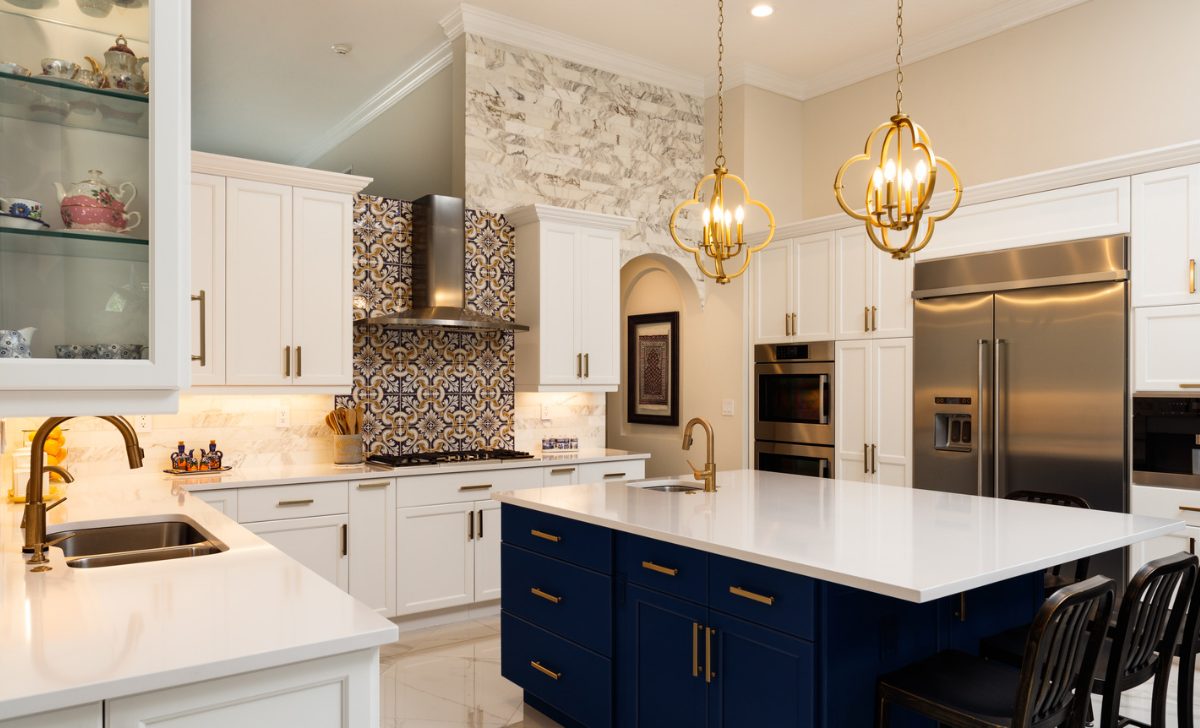
The fix: Before designing, photograph everything currently stored in your kitchen — cabinets, countertops, fridge, even items in other rooms because they didn’t fit. Add 25% for “things I’ll buy in the next 3 years.” That’s your real storage requirement. If your designer says “you don’t need that much,” they’re optimising their drawing, not your life. Whether you choose an L-shape or a U-shape kitchen, your storage capacity is set during design — get it right once.
The bonus mistake: Accepting “warranty” without a written component-by-component list
“5-year warranty” sounds reassuring. It’s also nearly meaningless without specifics. A real warranty document should specify:
- Shutter: warpage / delamination — typically 5-7 years on quality builds
- Hinges: Hettich and Blum offer lifetime warranty on the hinge mechanism. Ebco offers 5-10 years. Generic Chinese hinges typically have no enforceable warranty.
- Drawer slides: Should match hinge warranty
- Carcass: swelling/warping — typically 5 years on BWP/HDHMR, often excluded for PLPB
- Edge banding: peeling — 2-3 years on quality builds
- Laminate / acrylic finish: bubbling/peeling — 2-3 years standard
- What voids warranty: water damage from leaks, modifications, etc. — read carefully
Get this in writing on the company letterhead before you make the final payment. We give written component-by-component warranty on every kitchen — partly because that’s just how serious manufacturing should work, and partly because it forces clarity.
Edge banding — the small detail that betrays the whole build
One last spec that quietly separates a quality kitchen from a budget one: edge banding thickness.
Industry standards:
- 0.4-0.8mm PVC: economical, suitable for inside cabinets and shelves where wear is light
- 1mm PVC: standard for kitchen cabinet doors
- 2mm PVC: premium, recommended for shutter edges around heavy-use areas (hob side, sink side, drawer fronts)
Ask for the selected edge band thickness and material to be specified in writing.
What an honest, complete spec sheet looks like
If you take only one thing from this article, take this. Here’s what to ask every vendor for, in writing:
| Component | Specify |
|---|---|
| Carcass | Material + brand + thickness + grade. e.g. “18mm BWP plywood, Greenply Gold Marine, IS:710 stamped” or “18mm Action Tesa HDHMR” |
| Shutter material | Material + thickness. e.g. “18mm HDHMR” or “18mm MDF” |
| Shutter finish | Type + thickness + brand. e.g. “1mm acrylic, Greenlam Acrylux” or “0.8mm laminate, Merino” |
| Edge banding | Thickness in mm + material. e.g. “2mm PVC, all four sides sealed” |
| Hinges | Brand + model + count. e.g. “Hettich Sensys soft-close, 25 sets” |
| Drawer slides | Brand + model + load rating + count. e.g. “Hettich Quadro V6, 25kg load, 8 sets” |
| Handles | Brand + finish + count |
| Countertop | Material + thickness + brand. e.g. “20mm Quartz, Caesarstone Pure White” |
| Backsplash, skirting, lighting | Itemised, included or extra |
| Appliance cut-outs | Listed by appliance with manufacturer dimensions |
| Warranty | Component-by-component, in writing |
| Lead time | Specific dates: deposit, shop drawings, factory production, on-site installation |
| Payment terms | Stage-wise — typically 30/40/30 split |
Send this list to three vendors. Ask each to fill it in. The vendor who refuses or gets vague is the vendor you don’t want.
Honest recommendations from a manufacturer’s seat
If we were buying a kitchen tomorrow ourselves, this is what we’d do:
- Buy the appliances first. Hob, chimney, dishwasher, refrigerator, oven. Get every dimension sheet.
- Pick carcass material based on city, not just budget. Coastal humidity (Mumbai, Chennai, Goa) → BWP IS:710 marine ply. Inland NCR / Bangalore / Hyderabad → HDHMR is the sweet spot at lower cost.
- Spend on hardware, not on shutter glamour. Hettich hinges/slides outlast 3 generations of “fashion” laminate finishes. Blum if budget allows.
- Take samples home for 4 days. Showroom lighting lies. Live with the colour you’re committing to before signing.
- Get itemised quotes from 3 vendors with the same spec sheet. Compare identical written specifications and included work.
- Read the warranty. Component-by-component. In writing.
What we honestly cannot promise (and neither can any other manufacturer)
To be fully honest with you:
- Even the best kitchen will need maintenance. Plan for maintenance and ask what after-sales service covers.
- Lead times are variable. Quality custom kitchens take 4-8 weeks from final design to installation. Anyone promising 10-day delivery is using pre-built parts that may not fit your space precisely.
- Site changes always cost extra. Plumbing relocations, electrical upgrades, civil work — these are separate from the modular cabinetry quote and need their own budget.
- “Lifetime warranty” usually has fine print. Read it. Most “lifetime” guarantees apply only to specific components (hinges, slides) and exclude many failure modes.
Want to skip the homework?
If this all feels like a lot — that’s fair. We’ve spent 12 years figuring out exactly what to spec, where to economise without compromising, and where to invest. Book a free design consultation with our team in Gurgaon, Delhi NCR or Mumbai. We’ll send you our standard spec sheet upfront so you can compare us against any other vendor on identical terms.
No fluff. No upsell. Just an honest spec sheet, an honest quote, and an honest conversation about what your kitchen actually needs.
— The WideConcepts team
Sources and further reading
The references below provide background reading. Confirm current product specifications with the manufacturer and request a project-specific quotation before ordering.
- HDHMR pricing: HDHMR Board Price List India 2026 — hdhmr.in and HDHMR board price 2026 — Building and Interiors
- BWP plywood pricing: Plywood Price in India 2026 — Greenply and Cost of plywood per sq ft in India — Building and Interiors
- IS:710 marine plywood standard: Bureau of Indian Standards IS 710 Product Manual
- Hardware brand comparison: Hafele vs Hettich vs Blum — Delhi Modular Kitchen 2025 Buying Guide and 10 best kitchen hardware brands in India — Building and Interiors
- Modular kitchen cost data Delhi NCR: Best Modular Kitchen Cost in Delhi NCR 2026 — Tavasta Design Studio and Modular Kitchen Design Cost in Delhi NCR 2026 — Rishabh Interior
- HDHMR vs traditional plywood (deep technical reference): 7 Benefits of HDHMR Over Traditional Plywood — WideConcepts
- Edge banding standards: What is the best thickness for PVC edge banding — SHARC
- MDF and particle board limitations: Moisture-Resistant MDF — Benefits & Best Uses
For a quotation based on your measured layout, selected materials and finish, contact WideConcepts directly. Confirm the included work, taxes, delivery and installation in writing.
